News - Local
Features
-
Serving as an Area Seventy Was Beautiful and Sacred
Reflections from Brother Rodney Ames -
Relative Race
Insights from a Kansas City church member/photographer -
Fasting Insights
"Ye shall continue in prayer and fasting from this time forth.” -
Saint on the Street
How do you make Sunday Special? -
We Want to Know!
What's your favorite new hymn and why? -
Liberty Recipe Exchange
Favorite Fall Recipes -
Recipes Needed
What's your favorite treat recipes to give friends and neighbors at the holidays -
Looking Back at Lessons Learned
Has your attitude toward material possessions changed over your lifetime?
Outreach & Missionaries
Looking Back at Lessons Learned:
Has your attitude toward material possessions changed over your lifetime, and if so, how?
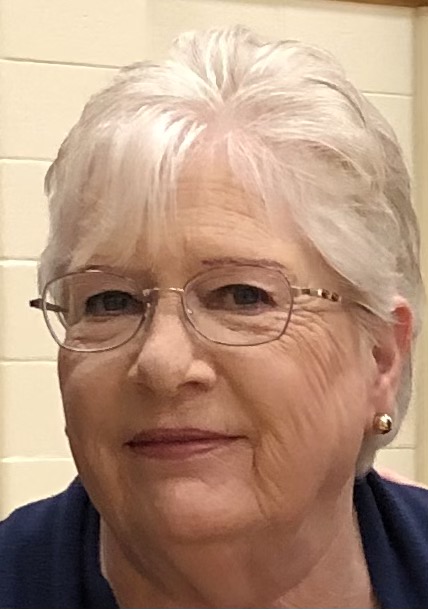
Rosemary Laufer, Stake Historian (Shoal Creek Valley Ward)
What do some of our longer-serving and -lived stake members think on issues?
This issue’s query: “Has your attitude toward material possessions changed over your lifetime, and if so, how?”

Suzanne DeBie-Morlan (North Brook Park Ward)
I was raised as one of five daughters born to my mother in the space of seven years. You can imagine how busy she was and how much stuff might have accumulated in that household, but I do not actually remember anything about that. When I married, I became a military wife and responsible for helping move my own family a number of times over eight years, overseas to Germany and within the US to places including Fort Sill and Fort Ord. When we left the military and established a “regular” home, of course possessions multiplied with our children. However, when the children grew up and left home, they did not leave behind stuff for me to deal with, as is so common for parents. I learned over the years to be pretty organized, and my daughters also like to live a neat, i.e. not hoarder, lifestyle.
Now that I am older, I have downsized from a big home into an apartment. For the past five years I have been getting rid of stuff (I prefer to give to the VA) and don’t keep as many things. I do have a few small sentimental items, and some which take up wall space but not room space. My husband is more of a “keeper” than I, but our apartment is comfortably-sized enough that we each have some space of our own and so respect each other’s territorial choices without fussing. The one thing we agree on keeping is food and water storage, and we have some reasonable schemes for organizing what we have and keeping it up to date.
My motto is, If life is too complicated, simplify it. Less possessions mean I don’t have to do as much housework. This frees time up for me to deal with increasingly aggravating bookkeeping-type items like tax questions, medical issues, etc. More importantly, it frees up time for me to do what is most important to me, which is family history and temple work, and interacting with my family.

Richard Everett (North Brook Park Ward)
Stuff is not important to me. I am currently living in a space about 1700 sq ft after downsizing most recently from 3500. I have a full basement I am working on clearing out. What IS important to me–and frankly always has been–is my family, trying to be a good person, and being of service to people around me.
I grew up in a household with professional parents who worked hard and who used their resources wisely. My dad once advised, “Live in the least expensive house you can in the most expensive neighborhood.” As a result, my brother and I were privileged to go to really fine schools, associate with friends who generously shared some of their greater privileges with us, and learn by example how to prioritize family and learning over goods. We learned to buy the best we could afford but then to take care of it, and not to show off what we had.
I did get a horse for my tenth birthday. I did at one time drive a really nifty red Porsche. However, later in life I proudly drove a VW beetle for 26 years.
My parents saw that we had some of the worldly goods our friends did, but on a much smaller scale. We were truly like a “Leave It to Beaver” family in our home and traditions.
When I married my wife Marcia, we found that we pretty much had similar attitudes toward belongings. Both sets of parents wanted to help us in all sorts of ways, but we were insistent on making it on our own. The only point we gave in on was when we allowed them to buy drapes for our first home. I embarked on a military career in the Army (Infantry) that lasted over 30 years, and we moved at least ten times–including to Forts Bragg, Benning, Leavenworth, Ord, and to Panama and Germany. Because of this and the Army’s weight limit for shipping possessions, we learned to keep our baggage light and pack only what we truly valued and needed. Eventually we did settle into a three-story, five-bedroom, beautiful home in Leavenworth, and with five children stuff did began to accumulate. It’s hard getting your kids to take their stuff away once they leave home!
My one weakness in material goods has been fishing and fly-tying equipment. I confess I have a basement full that Cabela’s could put a label on and open as a store. This has brought me a lot of pleasure and camaraderie with friends and family over the years, and much of it is still being put to good use, though not as much as I could have in my younger days. I am now trying to share it out to family and neighborhood kids. Hey! Please contact me if you want to learn how to tie flies or maybe need a fishing pole. It’s possible I might be able to help you out.
I am grateful for my parents and my wife who taught and always encouraged me to value the true wealth in life—the people around us.

Carol Hite (Shoal Creek Valley Ward)
The old Gershwin tune “I Got Plenty o’ Nuttin” might describe me, to a point.
I have never been interested in having material possessions. What I prize most is…to be happy.
I grew up poor in a household headed by a father who was a schoolteacher/farmer and mother who was a beauty school teacher/beautician, and both were very frugal.
In the 8th grade I really wanted to have a poofy petticoat like girls of that time were wearing. My mother said, “If you want it, you’ll have to get a job to pay for it.” So, at the age of 13, I went out and got a job waitressing. (I have been working ever since.) I did buy the petticoat, but after getting it, I found it wasn’t all that important to me after all.
I married a man who was my opposite in this regard–he liked stuff. However, as we both were earning money, he did what he liked with his so long as we covered all our household bills. He became somewhat of a hoarder, so his domain became our downstairs and mine was upstairs. (I loved him greatly despite this difference in our natures.) When he passed away I put one of our sons in charge of clearing out all his stuff, and it was quite a job. When I myself shed this earthly coil, however, I tell my kids it won’t take them more than an hour to clean out the house. My furniture is old but comfortable and, would you believe, I just barely replaced my 45-inch TV (that my husband wanted) with a 32-incher—and that only because a thunderstorm blew the power out on the first one.
My children know not to give me gifts I have to display or put away somewhere. Once a year I pretty religiously get rid of things I haven’t used in the last 12 months.
My five brothers and sisters all have similar attitudes toward material possessions as I do. However, they could all afford to buy anything they want. One brother wouldn’t buy a house until he could pay cash.
I appreciate the comforts of living that I enjoy but, as I said before, what I most desire is to be happy.

Mary Alice Jeserick (Kellybrook Ward)
My husband owned and operated a farm of about 500 acres in Miami County, Kansas. His parents purchased the land at different times, but started with 200 acres of forest, brush, and rock in 1944. It was hard to make a living at farming. His parents were German immigrants. He was born 2.5 months after they arrived in America. I inherited an 80-acre farm in Linn County, Kansas, after my father’s death in 1999. My mother’s great-grandparents homesteaded that farm after he returned from duty in the Civil War, plus other acreage which was inherited by my sister. It was deeded to him by President Ulysses Grant in 1866.
After my husband passed away, I sold his farm and relocated to Kansas City to be near the temple. We had a lifetime of material possessions that I tried to winnow down before moving to my smaller residence, but I still have a lot that need to be dealt with either before or after I myself pass on. I find I do have an emotional attachment to some of them, such as my kitchen table and chairs that I no longer had room for in my new place and so sold on Facebook Marketplace. I had to leave behind my piano and organ. I had 40 buckets of food storage wheat that I gave away before the move, keeping four of them plus a grinder. I have a number of #10 freeze-dried cans of food that I am exploring to make sure is still good. (Ask me sometime about my “dog food stew”.) I did, however, keep my grandmother’s solid oak round antique dining room table. I have some tubs full of photographs that I want to deal with (yes, I have scanned a number of them). So, items of emotional attachment are taking longer for me to dispose of. However, things in general no longer matter as much to me as in the past, and as for the emotional attachment, well, when I am gone that will no longer be a burden for me!
Practically speaking, I currently prize some items in my home that allow me to live better, such as a special recliner.
I have one son and his family who live out of state, and what I am unable to dispose of before death will fall to him/them to handle. I know it will be a job for them, despite all that I am trying to do to make it otherwise. My health is not good, and what energies I do have I use first for things that matter most to me at this stage of my life–family history and temple work. I have joyous moments uncovering ways to help those who have preceded me. This is “the better part” I am choosing right now.
Next Month's Question:
What stood out to you about General Conference?
We want to hear from you! Fill out the form below to be part of the conversation: