News in Liberty, MO
Save the Date
News - Worldwide
Features
Trek
-
Saint on the Street
Tell me about a pioneer in your family? -
Liberty Recipe Exchange
Favorite Mission Recipes -
Recipes Needed
Send us your favorite after-church traditional "recipes?" -
Looking Back at Lessons Learned
How has your practice of individual and/or family prayer changed over your life (if it has changed)?
Outreach & Missionaries
Saint on the Street:
Tell me about a pioneer in your family?

Kaely Holt, Reporter/Managing Editor (Liberty Ward)
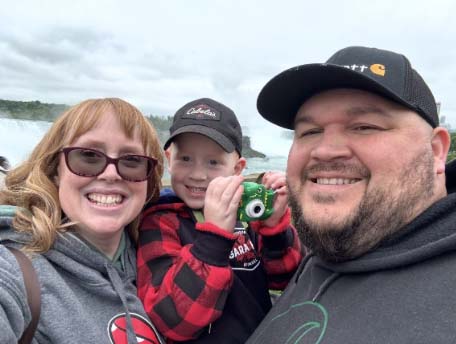
Fraser Millet (North Brook Park Ward)
As we celebrate Pioneer Day, I have a special connection to one remarkable pioneer—Artemus Millett, my sixth-great-grandfather. A skilled stonemason living in Canada, Artemus was personally sought out after the Prophet Joseph Smith learned of his talents. Brigham Young was sent to teach him the restored gospel and invite him to gather with the Saints, bringing $1,000 to help fund the construction of the Kirtland Temple. Artemus accepted the gospel, faithfully answered the call, and became the master builder who supervised much of the temple’s stonework. His craftsmanship, sacrifice, and unwavering faith helped create one of the most sacred buildings in early Church history. I am grateful for the legacy of faith, consecration, and service he left to his family and to the Church—an inspiring reminder that the Lord prepares individuals with unique gifts to help accomplish His work.
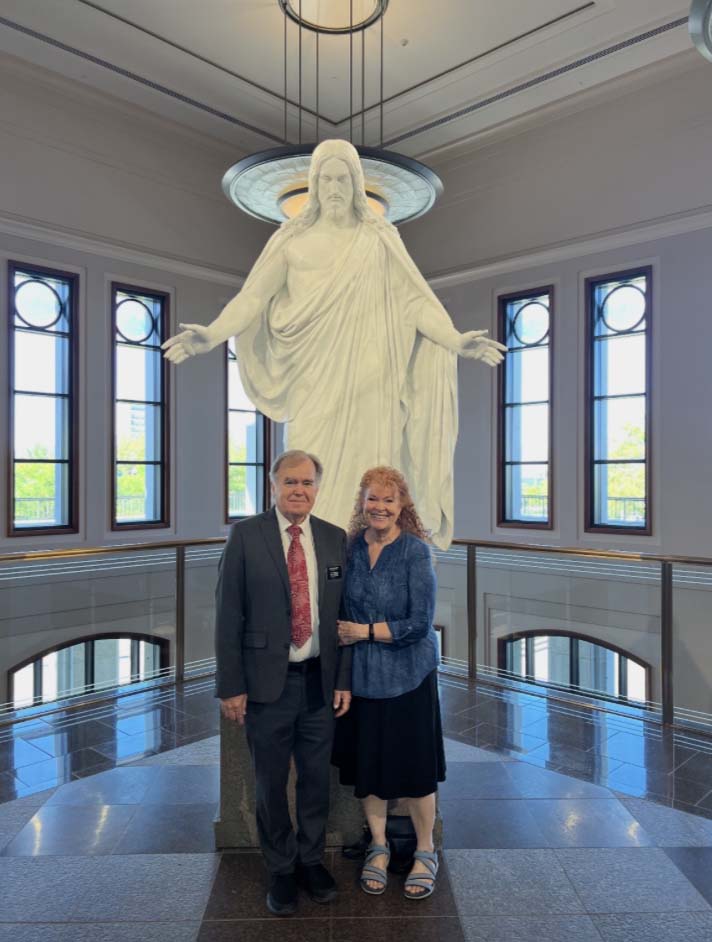
Marjorie McKinney (Doniphan Ward)
This following story is about my great grandmother, Mary Sorenson, when she was little, living in Sweden. She joined the church. Her aunt told her if she joined the church, she would lose her inheritance. She still joined and moved to Utah. When she was five years old, she was playing in the woods and heard beautiful music. She became very excited and called her mother outside to listen, saying that there were a lot of people singing in the woods. Her mother heard it very faintly, but couldn’t determine where it was coming from, and so passed it off as being unimportant. Some 60 years later, Mary was attending General Conference and heard the Salt Lake Tabernacle choir singing “Glory To God In The Highest.” She immediately recognized it as the song she had heard in the woods as a child. She also discovered that her experience in the woods had taken place at the same time Joseph Smith organized the Church of Jesus Christ of Latter-day Saints, 6 April 1830.

Whitney Lawter (Kellybrook Ward)
My great-great-great-grandmother Sarah Ann Haigh was born in England, converted to the gospel, and then as a teenager/young adult immigrated to America in hopes of making it to Zion with her family. She crossed the plains with her family and the Martin handcart company. When the company arrived at the North Branch of the icy Platte River, the early winter storm began and everyone in the party had to cross. Sarah Ann was 19 at the time and barely 5 feet tall, but she made 32 trips across that frozen river and carried 16 people on her back to safety that day, many who were too young or too frail to do it by themselves. Around this same time, President Brigham Young was speaking at a conference in Salt Lake and explained the plight of this handcart company. He stated that 20 teams were needed by the next morning to send help. Women collected quilts, underclothing, mittens, and what other articles they could to help make those in the handcart company comfortable. History tells us if it had not been for the brave souls who set off to rescue this struggling Martin handcart company, that not enough of the company would have been left alive to tell their story. Among those rescuers was my great-great-great-grandfather Franklin Stanley. He met Sarah Ann, the woman who had rescued so many of her fellow company members herself, during the rescue and they were married the next spring by President Brigham Young! It was meant to be! I’m so thankful for Sarah Ann’s example of strength and courage.
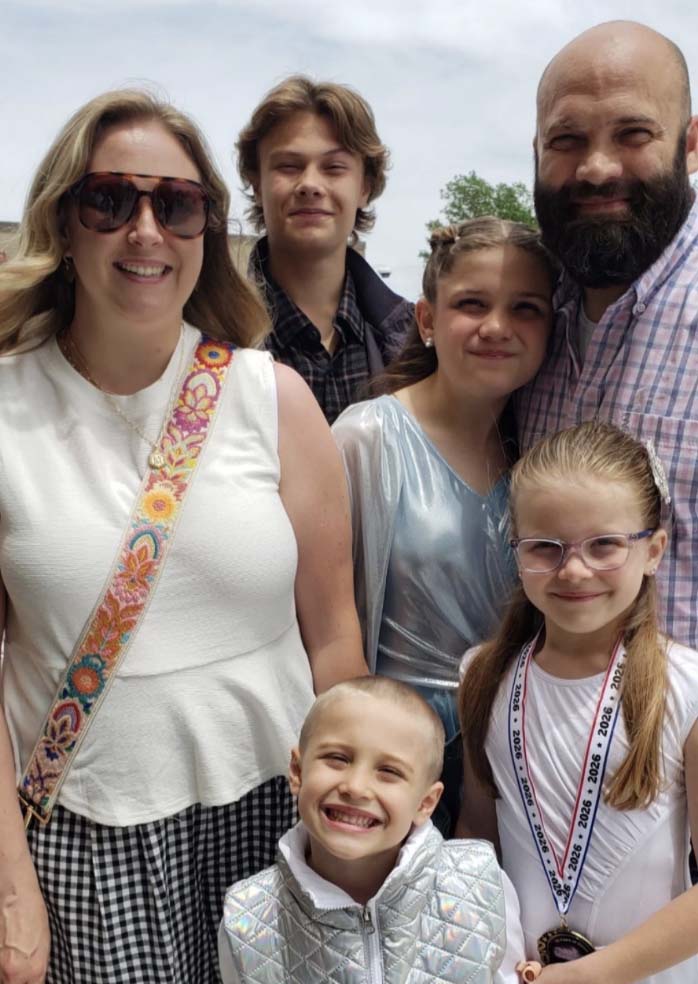
Marissa Sanchez (Hodge Park Ward)
My husband Nick is a pioneer. He was one of the first people in his family to get a master’s degree. Before he started college he was working as a server in a restaurant. He found a love and talent for math and science when a friend asked him to help him with his college calculus homework. His friend was retaking calculus after not passing the class. Nick decided to read the book and teach himself calculus to teach his friend. He tutored his friend through the class and in the end his friend passed the class! Because helping his friend gave him confidence and he showed himself that he could learn hard things, he decided to go back to school for himself. He put himself through college working as a server in a restaurant while taking classes. He got a bachelor’s degree in Biomedical Physics and then decided he wanted to go into Environmental Engineering. He graduated with his master’s degree and has been a great example of hard work, perseverance and grit- A pioneer in education in our family!
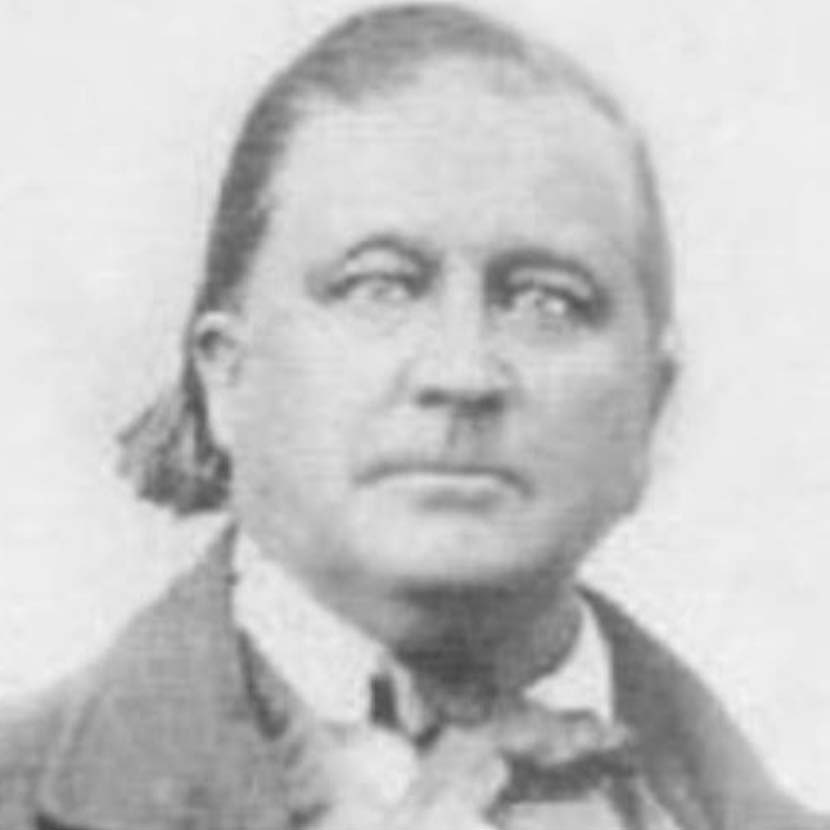
Phoebe Mason (Kellybrook Ward)
Although I don’t have any pioneer stories on my side of the family, I am lucky to be connected to some through marriage. My husband’s 3rd great grandfather is Joseph Holbrook.
When Joseph Holbrook put down his plow in Wethersfield, New York, in the autumn of 1832, he could hardly have anticipated that a single book would rewrite the trajectory of his life.
Curious after hearing traveling missionaries Evan Greene and Lorenzo D. Young preach, Joseph sought out a copy of the Book of Mormon from his cousin, Mary Ann Angell. Reading it ignited a deep conviction within him. On January 6, 1833, he stepped into icy waters to be baptized. Within months, he was ordained an Elder and embarked on his first mission across New England alongside his cousin, Truman O. Angell, helping establish new groups of believers as far as Providence, Rhode Island.
For Joseph, faith was never purely passive—it demanded immediate action. When news reached Kirtland of severe persecution facing the Saints in Missouri, Joseph sold his New York farm, packed up his family, and answered the call to join Zion’s Camp in 1834.
He settled along Plum Creek near Far West, Missouri, putting his skills as a carpenter and builder to work. He constructed family homes, a local schoolhouse, and an office for Bishop Edward Partridge. But peaceful building was short-lived. As tensions erupted into the Mormon–Missouri conflict of 1838, Joseph took up arms as a First Lieutenant in the local militia. During the desperate night action known as the Battle of Crooked River on October 25, 1838, he engaged in hand-to-hand combat and suffered a severe sword wound to his left elbow—a physical scar he carried for the rest of his life.
Following Governor Boggs’ Extermination Order, thousands of destitute Saints fled east across the frozen Mississippi River into Illinois. Prophet Joseph Smith personally tasked Joseph Holbrook with a vital humanitarian mission: purchasing, milling, and distributing corn to save starving refugee families arriving near Quincy.
Joseph later served in local leadership at Ramus and Nauvoo, was commissioned in the Nauvoo Legion, and traveled to Kentucky in 1844 to campaign for Joseph Smith’s U.S. presidential bid.
When the Saints were forced out of Nauvoo in 1846, Joseph once again organized his household for the wilderness. Traveling across the Great Plains in the Brigham Young Company of 1848, his wagon rolled into the Salt Lake Valley in September of that year.
By 1850, Joseph settled in Bountiful, Utah, where his steady character and administrative experience served the growing community well into his senior years. He was appointed a Probate Judge for Davis County; a position he held for nearly a decade, represented his region in the Utah Territorial Legislature, and served in local Church leadership until his passing in 1885. Through decades of displacement, battle, and pioneer hardship, his detailed life sketches and journals remain a rich eyewitness account of early Latter-day Saint history.

Judy Marcell (Liberty Ward)
The following is an excerpt from a Civil War diary of my ancestors. I liked his remark near the end of the document. He was a soldier in the Union army.
The following are excerpts from the Civil War Diary of A. C. Hill.
I, A. C. Hill enlisted in the state service and was sworn into the service of the United States October 8, 1861 at Camp Melelen, county seat, Towa and remained in camp there until November 16 when we embarked for St. Louis on board the steamer Jenny Whipple where we arrived on the 19th and went into camp in Benton barracks where we remained until December 6…..
June 30, 1864 All quiet on the lines and so ends the month. We had three men and our captain wounded since we came on the lines. This month we marched in all 112.5 miles and in the months of May and June we marched 320 miles starting from Clifton, Tennessee.
July 1, 1864 Today some canonading also some skirmishing. A flag of truce.
July 5, 1864 Today we drove the rebels two miles. At night companies C. D, E, and K on pickett.
July 9, 1864 Shark shooting and canonading. At night the rebs fell back.
July 10, 1864 This morning took possession the rebel works as they fell back last night.
The rebs are now across the Chattahoochee River.
July 14,1864 We rest after 33 days in the pits.
July 21, 1864 Today we charged the rebs. Was repulsed. Loss in our company 7 wounded, 1 missing, and in the evening we moved to the left and built works and are now on the left.
July 22, 1864 The enemy attacked us at 12:00. Loss in our regiment 147. Loss in Company C of killed, wounded and missing 20.
July 23, 1864 Today we bury the dead.
August 30, 1864 Marched 8 miles. Here we came up with the enemy. Here we built works.
Heavy firing. Kept up all the time. Shell the rebels. The weather is pleasant for this time of year. Considerable rain. The boys are all right and in good spirits and driving the enemy. The right must and will prevail.
November 2, 1864 Arrived home after an absence of three years, one month and two days.
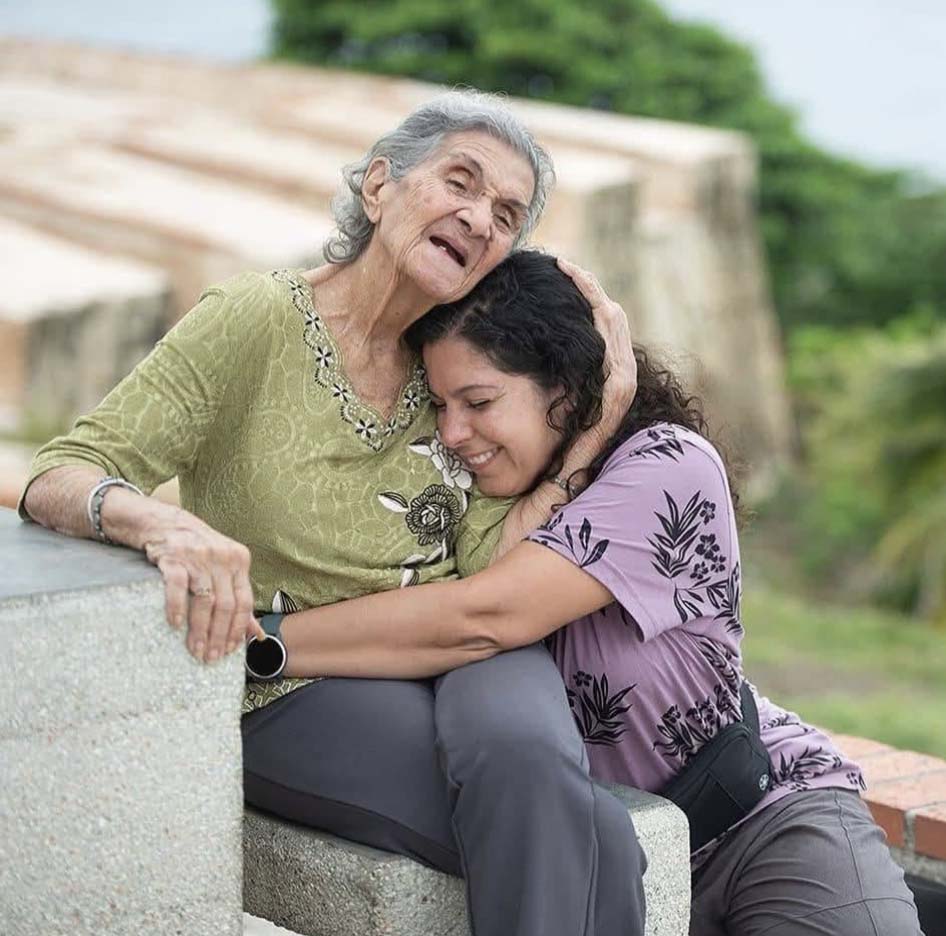
Loraine McCall (Shoal Creek Valley Ward)
Preface:
My grandmother wrote down a few stories of my great grandmother and gave me several stories. The original text was in Spanish. I hope to attempt to give in addition to the story some cultural insight, because since I was not raised in the church, and neither were my ancestors, I hope that the explanations give us a sense of “unification through understanding where we came from”. First and foremost, many of my ancestors were raised in Puerto Rico, which through the Spanish colonization became predominantly catholic. As I share this story please keep an open mind and consider how I have come to understand that we just did the best that we could with the knowledge that we had. My grandma titled the stories and this one was titled: Faith in Prayer it was a story my great grandmother gave of her grandmother. This is written in the first person in part by my grandmother so when it says “my mother’s grandmother” this is my grandma speaking. When she talks about praying to Saint Anthony, I see this as them not feeling worthy to approach God Himself, and see this not that it is a practice that we should follow, but I see it as God allowing us to stay as close to God with the limited knowledge that my family had. I am ever grateful to know that my ancestors held on to such diligence because within my own upbringing I had faith enough so I could recognize divinity when I was introduced to the restored gospel of Jesus Christ.
A few things to consider, as I have done a few research items, I have not yet connected this ancestor to this part of the island, But I have found both her and her son Juan (Juanito). The oldest record I have found of Teresa Guzmán Gomez is of a baptism record where she appears as the mother of her daughter’s baptism in 1839. From this and other records, I have estimated Teresa being born around 1820 give or take a few years. Additionally, my great-grandmother was 101 years old when she died. I don’t know how old my great-grandmother was when she told grandma this story, but I hold on to it since this is at least a small recorded story my grandmother preserved. My grandma was Arcadia Garcia-Garcia, and my great-grandmother was Agustina Garcia–Diaz.
Faith in Prayer
In the barrio Cubuy of Canóvanas [Puerto Rico], there lived an elderly woman named Teresa, who was said to possess spiritual gifts. Her humility was as great as her kindness. On the maternal side, she was my mother’s grandmother. She was frequently seen praying. For this reason, she was nicknamed “La Santa Beata” (The Pious Saint). From praying so much on her knees, she had developed sores. Her great passion was praying to the saint of her devotion: Saint Anthony. She paid him many religious tributes. Her faith in him was intense. She obtained everything she asked of this saint—a sign, according to her, that the saint was listening to her. Grandmother Teresa read a great deal, despite never having gone to school; she had learned to read and write through intuition and her own initiative.
One day, her son Juanito lost a set of keys to a chest and a wardrobe he owned. Knowing his mother’s great faith, Juan turned to her and asked her to pray to Saint Anthony. Grandmother Teresa asked Juanito to bring her a candle and kneel beside her to make the request. Afterward, Juanito left for work. She continued with her household chores. From time to time, she would look at the candle, make a request to Saint Anthony, and go back to work. She would offer a prayer to Saint Anthony and then resume her tasks.
At night, she prayed again. She thanked God for everything that had happened during the day. She prayed for her children and neighbors, and for the blessings received throughout the day. She gave Juanito her blessing and went to bed. She was just drifting off to sleep when she heard a sweet voice saying to her: “Teresa, Teresa, take Juanito’s keys.” “Put your hand through the window.” A bit nervous, she opened the small window a crack and reached out her hand, urged on by the voice. She felt a very soft, small, and warm hand. She opened the window a little wider and saw a small boy standing there smiling; his little white robe fluttered in the wind. He gazed steadily at her, still smiling. He didn’t speak; he just smiled. She watched him walk away along a path, and from a distance, he turned back and blessed her with his outstretched hand. Grandmother Teresa was overcome with astonishment. She hadn’t realized she was holding Juanito’s keys in her hand. Juanito came running immediately. He had been awake and had heard his mother’s entire conversation with the boy. He only managed to see the little robe fluttering down the path. He caught a glimpse of him. Grandmother Teresa closed the small window, feeling somewhat flustered. She couldn’t believe what had happened. She had never experienced anything like it. She hugged her son and handed him the keys. Juanito stood open-mouthed with amazement. He said to her, “Truly, Mom, you have such faith in that saint that I can hardly believe what I’ve just seen!” They embraced, and Grandmother Teresa prayed and prayed. She couldn’t believe it was the little child Saint Anthony holds in his arms. She simply couldn’t believe it…
Unable to contain their emotion, they both fell to their knees and began a prayer: “Our Father…”
Miracles do exist, and they had just witnessed one.
Grandma Teresa continued her holy mission, always praying to the saint to whom she was devoted. In Canóvanas, she was regarded as a saint. Priests visited her frequently.
My mother used to tell me that from praying so much on her knees, she would fall into a death-like trance and return to consciousness in the same mysterious way she had slipped into it. Many said she would die and then come back to life. Finally, she passed away at a very advanced age—around one hundred and four. Neighbors and townspeople accompanied her to the church and then to the cemetery, singing songs and hymns. All the priests who had known her attended her funeral. According to many in Canóvanas, a small church was erected in the Cubuy neighborhood in honor of “La Beata Teresa” (The Blessed Teresa).
Footnotes:
3. DifferentCatholic saint typically hold something as a reminder of why they are considered saints. In the Case of Saint Anthony, he holds a child.
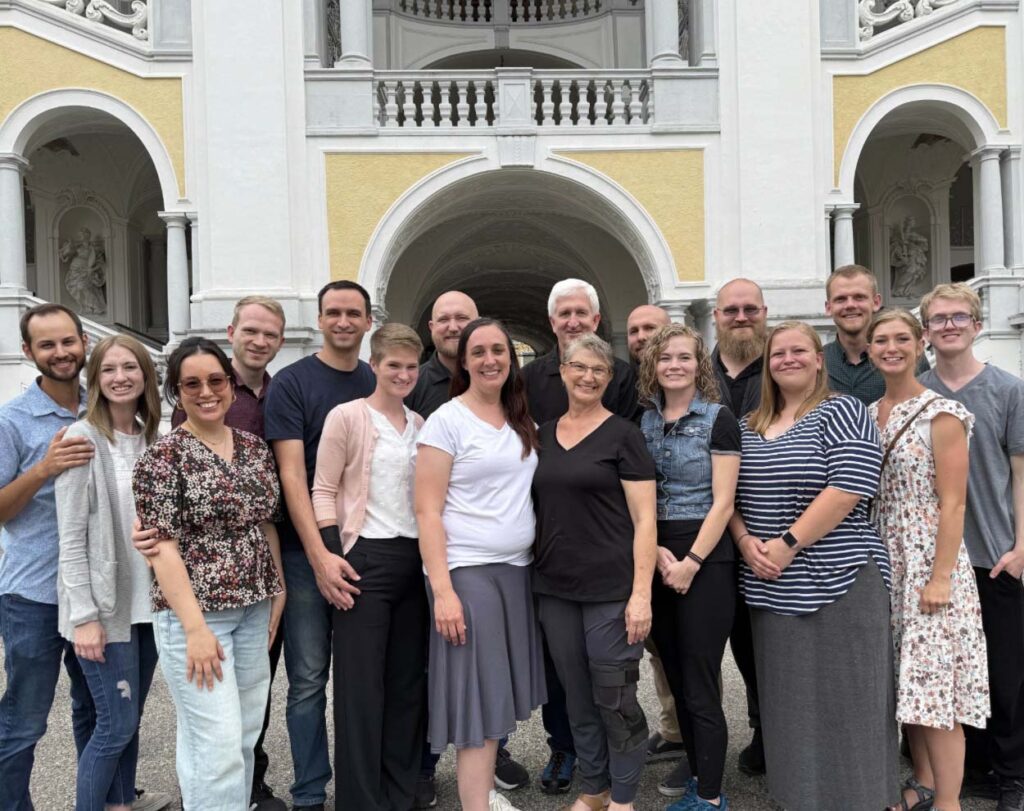
Bill Lister (Liberty Ward)
Being born on Christmas day is unique in itself, but Alfred Woodland began a life of spiritual destiny and decision on Dec. 25, 1835. He gave his descendants a warm sense of pride and gratitude to claim heritage from this noble man. His parents were George Woodland, born 4 Nov.1810 at Puckington, Somerset, England, and Anna Prince, born 2 Jan.1811 at Donyatt, Somerset, England. Alfred was born in Puckington on date mentioned and christened there on 18 Jan.1836 in the parish church.
There is no written record of his boyhood, but we are led to believe that he recited the lessons, did the chores, prayed the prayers, shivered the winters, played the games, absorbed the green beauty of the English countryside, and breathed deep the invigorating breezes from the Bristol Channel — all that the typical life-loving boy of nineteenth century England grew up on.
As Alfred grew to manhood the westward movement of time immemorial was gaining momentum, and his country was experiencing great economic and industrial changes. In the late 1700’s a machine was invented for spinning cotton, and Robert Fulton of America had given the world steam power to run machines. This cotton machine increased production but also produced social problems for those it put to work. Children with parents as well as orphans were bonded in literal slavery to the machines 12 to 15 hours a day. This brought about the abolition of slavery, the English Factory Act. The abolition of slavery had become a law through the efforts of Robert Owen, a Welsh humanitarian industrialist. The peaceful rural life had been transmitted to factory and communal living. The greenwards of the countryside were clattering with factories. It was the era of which Goldsmith wrote, “Where wealth accumulates and men decay.” – an era when England’s young writers like Tennyson, Browning, Dickens and Thackeray were also invoking their romantic effects on the young and adventurous.
Sometime before the age of 25 Alfred had crossed the Bristol Channel into Monmouthshire, likely for work there. He was digging a drain trench, now higher than his head, by virtue of his own labor, when some men passed by. He heard these strange words, “In the name of Israel’s’ God ’tis true!” Bewildered, but curious, he investigated and learned that one man was his neighbor and the other two were Mormon Elders from Utah. Interested, he attended their meetings and in due time was converted to the new Mormon faith. He was baptized 2 June 1860 by Thomas Curtis in the Llandyfod, Herefordshire Conference.
On the Ilth of November that same year he married Elizabeth Ridgeway of Caerwent. They had three children: Thomas George was born 5 Aug. 1861; Annie, born 3 Feb. 1866 and Lottie, born 29 April 1868. His wife ran a bakery; he did day work whenever he could.
The Elders spoke of Zion where the Saints were gathering in great numbers. He was eager to join them, but Elizabeth said a firm “no!’ His wife did not share his views about the restored gospel of Jesus Christ of Latter -day Saints. So many people were prejudiced against the Mormons and Alfred being one of them was hurting her business.
Alfred decided to go to Utah alone, secretly hoping his family would come later. In New York City he was so depressed at leaving his family and land for them. He worked and saved money and returned to England for them. His restless discontent was soon evident and Elizabeth suggested he go all the way to Utah and see what the Mormons were really like. He would soon see them as she did. He arrived in America 5 Sept. 1872, having sailed from Bristol on the ship S. S. Arragon.
In Richmond, UT he found work on the Oregon Shortline Railroad that was being built. He saved his money for his family’s migration. But Elizabeth’s mind was firm and unalterable. She refused to come to Utah. What deep mixed emotions must have torn this devoted man. Surely the prayer of faith brought him to the assurance of Matthew 20:29. “And everyone that has forsaken houses, or brethren, or sisters, or father, or mother, or wife, or children or lands for my sake shall receive a hundredfold, and shall inherit everlasting life. ” This, and the majestic hills of Zion must have given him the courage of decision.
On the railroad was a fellow worker, Niels Thompson, who had left his daughter, Nielsine, and her small son, Peter, in Denmark. She wished to come here but the father was not able to pay her passage over. Alfred loaned Niels the money and in due time she came.
They couldn’t understand each other’s native language, but she pointed him out as the man she wished to marry. They were married and had ten children together, and with her son, Peter, it made 11 children. The marriage was solemnized in the Logan Temple 10 July 1884 and five children were sealed to them: Niels Peter, Amelia, Emily Ann, Alfred George, William Thomas. Six were born later. They were Zina Eliza, Sarah Dorothea, Noah Lorenzo, Leonard, Ephraim James and Milton Prince.
Alfred did the buying for the family, having his own devices for size and fit. When shoes were needed he cut a stick from a tree, measured the foot and carried the stick to the store. He was a faithful church member all his life and taught his children the ways of the Lord. He also taught them loyalty to his adopted country of America. He became an American citizen in 1878 by the third Judicial District Court of Utah Territory. The children also cherish the memory of him holding them on his lap and singing, “The Land of the Free and the Home of the Brave.” He had many of life’s rich blessings and the independence that follows it. He worked on the railroad many years and became section foreman, this way paying for a sixty-acre farm south of Richmond. He also sent money to his family in England. He was not to be blessed with a long life, however, for pneumonia ended his faithful life on 5 Nov. 1901 at the age of sixty-six. He was buried in the Richmond cemetery. He was a High Priest.
Alfred Woodland’s brothers and sisters: Anna b. 5 Oct. 1834, Emaline b. 24 June 1837, Mary Ann b. 17 Jan. 1841, Phillip b. 22 Oct 1843, Elib. 29 Mar. 1845, Noah b. 4 June 1848, Ellen b. 5 Oct. 1851 and Sarah b. 24 Dec. 1854.
McKay Whitaker (Hodge Park Ward)
There were five Webb brothers: Edwin, Chauncey, Pardon, James Wesley, and Edward. Edwin opened a blacksmith shop in the summer of 1843. The Webb Blacksmith Shop can be visited in Nauvoo! They were responsible for making 2,500 wagons for the saints moving west. Some of the brothers left to go to Utah early on with Brigham Young in 1847. Edward (my great-great-great grandfather) stayed behind in Nauvoo for five more years making wagons for everyone else. He left in 1852 to join his brothers, traveling with his seven-year-old son Edward Milo. Halfway to Utah, they camped nine miles from North Platte. People were sick from drinking contaminated water, getting typhus fever. On July 31, 1852, a little girl who had typhus asked Edward for a blessing, which he gave her. The little girl survived, but Edward himself died the next day. Before giving her a blessing, others cautioned him not to, since there was a chance he’d also get sick. His response: “This is my job as a priesthood holder.”
Becky MacGugan (Rush Creek Ward)
My great-great-grandfather on my dad’s side, Heber Robert McBride, was born to Robert McBride, Jr. and Margaret Howard on May 13, 1843, at Churchtown, Lancaster, England. Robert
McBride, Jr. was baptized into the Church by Orson Hyde on Oct. 1, 1837. His father was one of the first eight to be baptized in England at the River Ribble. His family moved to Scotland and then back to England. Their biggest desire was to come to America and join the Saints there. A portion of their earnings went to the Immigration Fund. The McBrides talked about coming to America so much that the youngest child said that when they got to America, they were going to have a lot of fun. In June of 1856, they left England on the vessel “Horizon”. They sailed for five weeks and landed in Boston. They were the first “Mormon” immigrants to land in that post. They made it to Iowa, where no provisions had been made for them. They stayed for six weeks. The McBrides were told that the only conveyance would be via handcart. Margaret McBride gave away all of her belongings except for a few pieces of clothing and bedding. They were given a tent to share with another family of seven. This is how they began their journey in the Martin handcart company. The first place they stopped was Florence, Nebraska, where they stayed for three weeks. It was late in the season and extremely cold. Some chose to stay and others journeyed on. Those that were not able to keep up were forced to wade the streams. By the time they reached Fort Laramie, provisions were growing scarce. Everything they had was just bare necessities, in clothing and bedding. Heber’s mother Margaret got so sick that she rode in the handcart. His father also got sick, mainly because he went without food to make sure the children ate. Fourteen-year-old Heber and his 16-year-old sister Jeanette pulled the handcart, with their parents taking turns riding. They were always last coming into camp. Many people died from starvation and fatigue. One night at the Upper Crossing of the Platte River, Heber’s father didn’t make it to camp. It snowed heavily that night. They found his father dead and covered in snow. They took his mother’s blanket and wrapped his father in it to be buried with the 13 others who died that night. Heber wrote in his journal, “No tongue can tell or pen write the suffering of the Martin handcart company. He was the oldest son now. With his ill mother and siblings in tow, they kept going. They only had four oz. of flour a day. The snow was deep and they were so weak that it was nearly impossible to go very far. Someone came and told them that teams were coming with supplies to meet them. Then another pound of flour was given to each one over 12 years old. This lasted until they made it to Fort Bridger, where they were met with men in wagons. Everyone in their family except for Heber and his sister Jeanette were given rides. This was because there was no room for them. So they continued walking. The teams broke a trail through the snow for them but, being young, they couldn’t keep up. They came to a river and knew they would have to wade through it. They cried. Heber went into a small cave in the rocks and prayed that if no one would help them, that they would just die, so they wouldn’t have to go through the freezing cold water and walk in wet clothing. Heavenly Father answered his prayer. A man came and pulled their handcart across and then came back and carried them. When they came into camp that night, there was a big fire and a tent. His mother and her friend were sitting by the fire. 144 people out of the 500 in their Company died since they had left Nebraska. They had to wait until more help came. They left the cart and rode the rest of the way into Ogden, UT, on November 25, 1856.
Next Month's Question:
What are your after church traditions?
We want to hear from you! Fill out the form below to be part of the conversation: